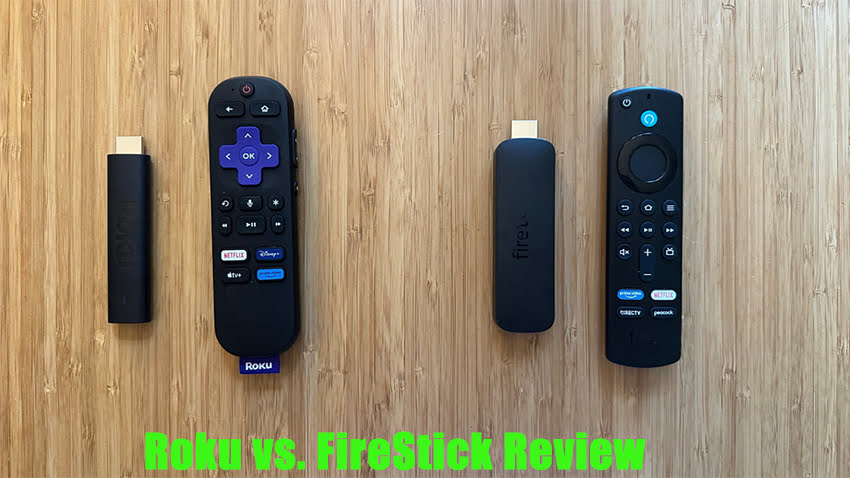
Roku vs. FireStick Review: Streaming has basically become everyone’s go-to way to unwind (and let’s be honest—lose track of time), so the device sitting under the TV suddenly matters way more than it should. With so many choices floating around—Google Chromecast, Roku, Amazon Fire TV Stick—it’s easy to get stuck in that “which one won’t annoy me later?” spiral. This article keeps it simple and zero-fluff by putting Roku and FireStick head-to-head, because those two are the real heavy-hitters—and picking between them is less about specs on paper and more about what actually feels smooth, fast, and worth your money when you’re deep into a late-night binge.
Roku VS FireStick
Roku’s been in the streaming game for ages—back to 2002, and by 2008 it was already teaming up with Netflix to roll out its first streaming device, which honestly explains why it’s still one of the most trusted names today. Fast-forward to now, and the Roku Streaming Stick Plus is the current flagship: a tiny little plug-in receiver that can push wireless 4K HDR streaming as long as the Wi-Fi isn’t acting like it’s stuck in 2010. The setup is refreshingly painless too—no overthinking, no tech drama—just a few basics and it’s ready to go.
Roku VS FireStick Quick Comparison
- Compatible TV: A 4K HDR-capable television with an available HDMI port.
- Reliable Internet: A fast internet connection is necessary to stream 4K HDR content smoothly, preferably with an unlimited data plan to avoid hitting data caps.
- Roku Account: Creating a Roku account beforehand can speed up the setup process.
Plug the wireless receiver into the TV, connect it to Wi-Fi, and boom—you’re in business with zero “why isn’t this working?” stress. The remote pretty much runs the whole show: scrolling through menus, changing the volume, turning the TV on or off, and even letting you use voice search so you’re not stuck painfully typing movie titles letter by letter like it’s some ancient ritual.
Privacy Alert! Your data is exposed to the websites you visit! The information above can be used to track you, target you for ads, and monitor what you do online. We recommend ExpressVPN — the #1 VPN out of over 350 providers we've tested. It has military-grade encryption and privacy features that will ensure your digital security, plus — it's currently offering 48% off. Your IP Address: Loading...
 Your Location: Loading...
 Your Internet Provider: Loading...
Roku vs FireStick Features 2026
Now that the basics are out of the way, it’s time to get into the fun part—what these devices can actually do. Roku comes out swinging with smart-home friendliness, playing nicely with Amazon Alexa, Google Nest, and even Apple HomeKit, so voice commands can handle the lazy stuff like changing volume, launching apps, or flipping channels without lifting more than a finger. The Roku Streaming Stick Plus also packs a long-range wireless receiver, which is basically a lifesaver for those TVs that live in the “Wi-Fi dead zone” corner of the house—meaning smooth, high-quality streaming even when the router feels miles away. And for Apple folks, AirPlay support is the cherry on top, making it ridiculously easy to beam videos straight from an iPhone or iPad like it was meant to happen that way.
Roku also sneaks in a genuinely useful mobile app, turning your phone or tablet into a full-on remote—perfect for those moments when the real remote magically “disappears.” The best part? Private listening: just plug headphones into your phone (or even into certain Roku remotes) and binge in peace without blasting the whole house—some bundles even toss in headphones for that exact reason. Sound-wise, the Roku Streaming Stick Plus supports DTS surround sound over HDMI along with digital stereo, so movies don’t end up sounding flat and cheap. And content? It’s stacked—Netflix, Hulu, Prime Video, Disney+, plus free live TV channels and music apps like Spotify and Pandora, basically covering everything from guilty-pleasure shows to background playlists.
Roku Streaming Stick Plus Features
One of Roku’s best “why doesn’t everything do this?” features is universal search—it hunts through all the streaming apps you’ve installed and pulls up what you’re looking for, so there’s no app-hopping like a confused raccoon opening cupboards. Guest Mode is another surprisingly smart touch: perfect for guests, Airbnbs, or visiting cousins who always somehow wreck settings, because it lets them stream freely without messing up your recommendations or digging a hole in your watch history.
Even better, it can auto log them out on a set date, which is basically a polite way of saying “thanks for visiting, now get off my account.” Roku even throws in some casual gaming for when the Wi-Fi’s slow or the family needs a break—nothing intense, just easy stuff like Snake, Tic Tac Toe, and Chess that works right from the remote (so no one’s pretending it’s a PlayStation). And honestly, the remote finder feature on newer models deserves a small trophy: hit a button on the Roku device and the remote starts beeping, saving you from the classic couch-cushion excavation mission where remotes go to retire in peace.
Best VPNS For Streaming Safely
1. ExpressVPN — Best VPN With the Fastest Speeds for Smooth Streaming
Best Feature
The fastest speeds we tested, ensuring you can stream, browse, game, and torrent without interruptions
Server Network
3,000 servers in 105 countries give you fast worldwide connections
Simultaneous Device Connections
Up to 8, so you can protect your compatible devices under one subscription
Works With
Netflix, Disney+, Amazon Prime Video, BBC iPlayer, (HBO) Max, Hulu, Vudu, DAZN, and more
2. NordVPN — Best VPN With the Fastest Speeds for Smooth Streaming
Best Feature
High security features and fast speeds for a reliable connection
Server Network
5,400 servers in 60 countries for improved accessibility and connection speeds
Simultaneous Device Connections
Up to 6 devices, suitable for protecting multiple devices simultaneously
Works With
Netflix, Disney+, Amazon Prime Video, BBC iPlayer, (HBO) Max, Hulu, Vudu, DAZN, and more


Fire TV Stick Features
Quick heads-up about the Fire TV Stick: it runs most of the same big-name apps as Roku, but it definitely puts Amazon’s stuff front and center—because of course Amazon wants you living in its world first. It does voice control too, but only through Alexa, so anyone hoping for Google Assistant or Siri is out of luck (and yeah, that can feel unnecessarily limiting). On the flip side, if the home is already Alexa-powered, the remote can do some cool smart-home tricks like controlling lights, checking security cams, and even handling calendar and to-do list stuff without touching a phone. Private listening is where it feels a bit behind Roku though—you can pair Bluetooth headphones, but depending on the headphones, the audio lag can hit and ruin the vibe, making it feel more “it works… kinda” than smooth and effortless.
The Amazon Fire TV app is handy for searching stuff or stepping in as a backup remote, but it doesn’t do private listening—and it can be a little temperamental, dropping the connection and making you resync more often than anyone has patience for. The Fire Stick also has casual games like Roku, though playing with a TV remote means “light distraction” at best, not exactly a gamer’s dream. Where it starts to feel a bit less polished is the extras: no Guest Mode, no remote finder, none of those small quality-of-life touches that quietly make Roku feel smarter. The remote itself is great for Alexa, though, and that’s really the whole point—Fire TV Stick is basically Amazon’s living-room control hub, and it shines most when the home is already deep in the Alexa ecosystem.
Roku vs FireStick Homepage Interface
Roku may win on features, but the real everyday difference shows up in the interface—because that’s what you’ll be staring at while deciding what to watch for 45 minutes. Roku keeps things refreshingly simple: log in and you land on a clean, no-nonsense home screen that neatly lists your inputs, apps, and a few other options without trying to overwhelm you. From there it’s easy to jump into featured free content, browse the channel store, search for something specific, or tweak settings—basically everything’s where you expect it to be, which feels oddly satisfying in a world where most menus are chaos.
One big win for Roku’s interface is that it doesn’t constantly shove one service down your throat. FireStick, on the other hand, loves autoplaying Amazon content right on the home screen—great if you enjoy surprise trailers, not so great if you’re watching your data or just want the device to feel snappy. Roku stays more “neutral,” like a chill middleman that gives you access to everything without trying to hijack your attention with its own originals, which honestly makes the whole experience feel calmer and less sales-y.
That “no bias” vibe is exactly why Roku feels more like a proper streaming control center, not a platform constantly trying to upsell something. If the goal is just to sit down and watch favorite shows without fighting the menu, Roku’s interface nails that clean, no-drama experience. Over time, the home screen naturally starts reflecting what you actually use—your apps become the main character—so it ends up feeling personalized without you doing much work. And if there’s a mood for aesthetics, Roku even lets you switch up themes (yes, even nerdy ones like space designs) to make the screen feel a little more yours.
FireStick Interface
FireStick’s interface definitely looks slick, but once you start using it, the experience doesn’t always match the glow-up. From the moment it loads, it throws a wall of streaming platforms at you like it’s trying to win a “most cluttered homepage” award, and woven into all that is a not-so-subtle obsession with Amazon Prime content—which, to be fair, can be great… or painfully meh depending on what it decides to push. As you scroll, you’ll spot highlights from different services, but Prime is always front and center, like the interface is politely saying, “Sure, watch whatever you want… but have you considered Amazon again?”
Slide over to the right on FireStick’s menu bar and you’ll find sections like Live, Free, Movies, Shows, and Apps—basically a whole buffet of options staring back at you. The problem? It’s a lot, and for anyone who isn’t super tech-comfy, it can feel overwhelming fast, like walking into a grocery store with no labels and too many aisles. All that choice can turn into decision fatigue pretty quickly, and the most annoying part is you can’t really dial down the Amazon-first vibe—Prime stays the star of the show no matter what, which is kind of a buzzkill if other streaming services are the real reason the device is even being used.
Roku vs FireStick: App Selection
Apps greatly enhance your streaming experience on both Roku and FireStick. Let’s explore what each platform offers.
Roku Streaming Stick Plus App Selection
Roku provides a broad variety of apps catering to all types of viewers. Its own “Roku Channel” is a standout, offering a rotating selection of free movies, shows, and more — all without any extra cost.
Roku Streaming Stick
Beyond that, Roku pretty much covers all the usual suspects—YouTube, HBO Max, Hulu—and then goes way beyond with a ton of international channels that make it feel like the device is quietly showing off. Spotify and other music apps are there too, so it’s not just a “TV-only” thing. Honestly, Roku isn’t out here reinventing streaming or doing anything wildly exclusive, but the sheer number of channels/apps is kind of ridiculous (in a good way). And then there’s this random little games section, which sounds like a gimmick until it turns into “okay fine, one more round”—mostly simple arcade-style games controlled with the remote, and you can download as many as the storage can handle. It even throws in weather apps too, which is surprisingly handy when the outside world exists and it’s not always Netflix weather.
Roku mostly sticks to what it knows—streaming—and does it well, but FireStick is the one that quietly tempts the “let’s tinker with it” crowd, because it supports sideloading and a bunch of apps that have nothing to do with TV, which basically turns it into a little playground for power users. All the usual apps are there—Netflix, YouTube, Spotify, Prime Video—except Prime content is clearly the favorite child and gets pushed right to the front like it owns the place (because, well… it kind of does). The annoying part is the home screen: trying to make non-Amazon apps feel equally important takes more effort than it should, and compared to Roku, it can feel like the device is politely refusing to let other streaming services shine.
FireStick App Selection
FireStick absolutely wins when it comes to app variety, and it’s not even close—because it runs on an Android-based system, it basically borrows the same app universe you’d expect on Android phones and Kindles. That means it’s not just streaming apps; it’s the whole buffet: VPNs for private browsing, stock/market trackers for the “checking charts at 2AM” crowd, and yes, even native TikTok right on the TV like it’s totally normal (questionable, but impressive). It also sneaks in some retro gaming joy—stuff like Final Fantasy IV and Sonic the Hedgehog—which feels weirdly nostalgic and dangerously distracting once it’s on the big screen. Bottom line: when it comes to apps, FireStick is basically the “do whatever you want” option, with versatility for days and enough choices to make decision fatigue a real hobby.
Roku vs. FireStick Device Options
So far the spotlight’s been on the Roku Streaming Stick Plus and the FireStick 4K, but that’s really just the “most popular picks” version of the story—both Roku and Amazon have a whole lineup of other models sitting at different price points, depending on how fancy (or budget-friendly) the setup needs to be.
Roku Device Options
- Roku Express ($29.99): The most affordable Roku, this plug-and-play device comes with a simple remote and supports the same apps as the Stick Plus but lacks 4K HDR streaming. It’s perfect for basic HD streaming.
- Roku Premiere ($34.99): For serious viewers, this device supports 4K HDR and includes access to a free 4K channel to try right away.
- Roku Ultra ($99.99): Known as Roku’s “ultimate streaming player,” the Ultra boasts a powerful wireless adapter for extended range streaming, Bluetooth audio support, and a handy remote finder feature.
FireStick Device Options
- Fire TV Stick Lite ($29.99): The entry-level FireStick streams in full HD but doesn’t support 4K. It includes the Alexa Voice Remote, though this remote lacks basic controls like TV volume adjustment.
- Fire TV Stick ($39.99): This mid-tier model offers a more fully featured remote, allowing input switching, volume control, and other TV functions.
- Fire TV Cube ($119.99): Amazon’s premium streaming device supports 4K Ultra HD, HDR, and HDR10+. It integrates tightly with Alexa, letting you control your smart home, check the weather, adjust volume, and more via voice commands.
Best VPN deals this week:
Final Words Which Is Better?
Picking the “better” device really comes down to what kind of user you are. If all that’s needed is a clean, no-nonsense streaming setup—just Hulu, Netflix, and friends without a bunch of extra clutter—Roku is the easy win. But if Amazon already runs the house (Prime subscription, Alexa speakers everywhere, smart home stuff humming in the background), FireStick fits in like it was meant to be there, and it honestly makes the whole ecosystem feel smoother and more connected.
Best VPNs for Streaming — Final Score:
Rank
Provider
Overall Score
Best Deal

9.8
★★★★★
save 84%
VISIT WEBSITE >
9.6
★★★★★
save 83%
VISIT WEBSITE >

9.4
★★★★★
save 84%
VISIT WEBSITE >